What Wangari Maathai Taught Me
Long before I understood Wangari Maathai's work, I understood what she represented.
I grew up with a parent who regularly reminded me that my facial features were nothing to write home about. According to her, my only saving grace was my brain. At the time, I wasn't sure whether that was meant as encouragement or resignation.
What I understood clearly was that beauty was considered an asset, and I had apparently been issued insufficient shares. Intelligence, therefore, would have to compensate. So, I learned to invest heavily in it. Then I discovered Wangari Maathai. Not the Nobel Prize winner. Not the environmental activist. The woman.
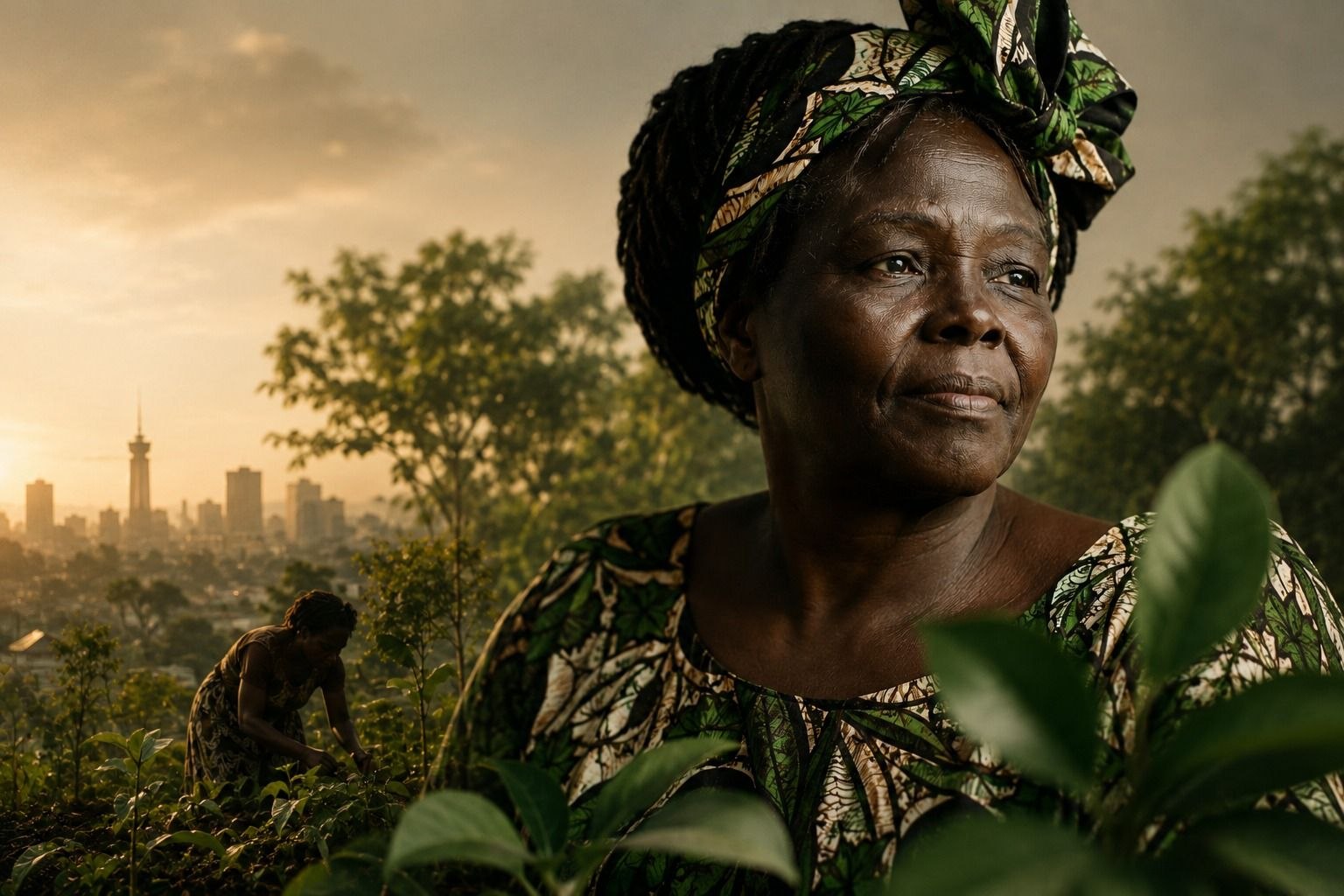
The first thing I noticed was not what she had accomplished, but how she carried herself. Here was a woman who seemed completely unconcerned with whether she was being admired. She was not performing beauty. She was not negotiating approval. She occupied space with a certainty I had rarely seen in women.
Long before I understood her work, I understood her presence. And for a girl who had been taught to measure her worth through other people's eyes, that mattered.
By then, I had already learned that value was rarely distributed equally. I had begun to understand that much of a woman's life would be spent negotiating definitions she did not create.
Perhaps that is why Wangari Maathai arrived at exactly the right moment. Not as a role model in the conventional sense. As evidence. Evidence that a woman could build a life around conviction rather than approval.
As a girl growing up in rural Kenya, I did not know many women who occupied public space with that kind of audacity. The women around me carried entire worlds on their backs, but they did so quietly. Their labour was visible; their authority, not so much.
Then there was Wangari Maathai. She seemed to be negotiating with no one.
At the time, I knew very little about environmental activism. I was too young to understand policy, governance, or the significance of planting trees. What I understood instinctively was that this woman had achieved something far more radical.
She belonged to herself.
That may sound like a small thing. It is not.
Girls are often raised to understand themselves through relationship. Someone's daughter. Someone's wife. Someone's mother. Someone's responsibility. Someone's pride or, largely, disappointment.
Rarely are they encouraged to become fully their own.
The world I grew up in had very clear ideas about where a girl belonged. Those ideas lived everywhere: in family conversations, in cultural expectations, in the quiet calculations people made about who deserved investment and who did not.
Without realizing it, I absorbed those messages. I learned that I would need to justify my ambitions. That my presence in certain spaces required explanation. That achievement might earn tolerance, but not necessarily acceptance.
Enter Wangari Maathai: The one who endured ridicule without becoming smaller. The one who was called difficult when she refused to be obedient. The one who was mocked, dismissed, and challenged by men who mistook power for permanence. The one who kept standing.
History often remembers extraordinary women through what they accomplished. What fascinates me more is what they refused. They refused to disappear, or to accept definitions imposed upon them. They refusal to become more convenient versions of themselves.
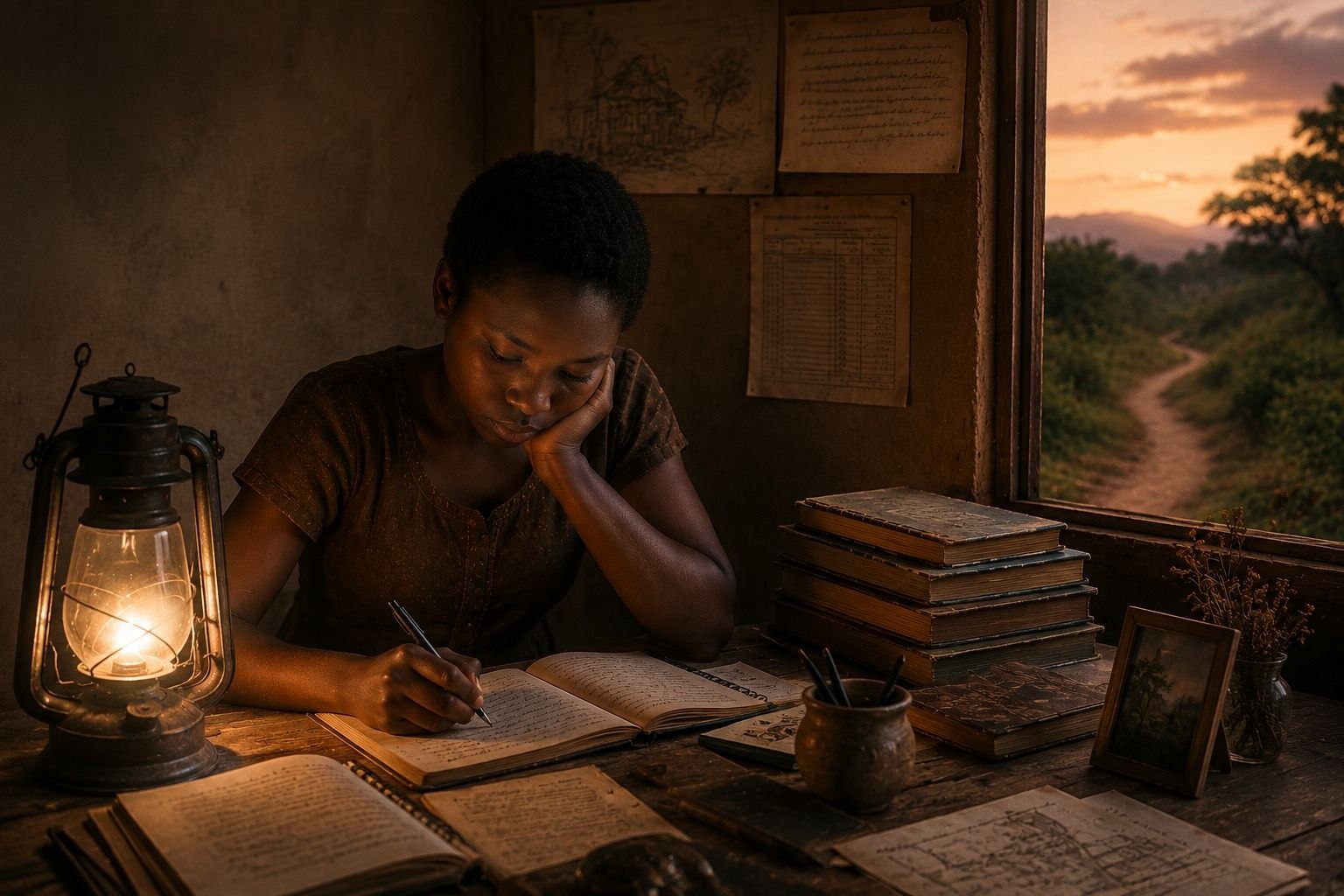
Wangari Maathai refused repeatedly. And every refusal expanded the possibilities available to women who came after her; including girls she would never meet. Including a girl studying under a flickering lamp in rural Kenya, trying to imagine a future larger than the one prescribed for her.
For years, I thought Wangari Maathai inspired me because she was brave. I no longer think that is the whole story. Bravery is visible. What she embodied was something deeper.
Self-possession.
The ability to remain anchored in your convictions even when approval is withdrawn. The ability to continue speaking when silence would be rewarded. The ability to understand that disagreement is not failure, and criticism is not collapse.
Those lessons have followed me far beyond Architecture. They have followed me into boardrooms and negotiations. Into rooms where my expertise was questioned before I had spoken. Into conversations where confidence was welcomed only when it arrived in a male voice. Into moments when accepting less would have been easier than insisting on more.
Each time, I have found myself returning to the same question: What does it mean to belong to yourself?
Not occasionally. Not when it is convenient. But fully.
The older I get, the more I think that that was Wangari Maathai's greatest lesson. Yes, she left blueprints on environmental stewardship. And activism. And courage. But more than that, it was the radical act of occupying space without apology; refusing to shrink so that others could feel larger, and understanding that your worth does not increase when it is recognized, nor does it diminish when denied.
For a girl who spent much of her life learning how others measured her value, that lesson changed everything.
For years, I thought the task was to become valuable; Wangari Maathai taught me that the real task was to recognize that I already was.
And perhaps, that is the true legacy of women like Wangari Maathai. They lead movements. But also, they expand our imagination. They show us versions of ourselves we did not know were possible.
And once you have seen that possibility, it becomes very difficult to return to the smaller life that was planned for you.