An Ode To My Grandmothers
This is a memoir of the two women whose names I carry through my life.
One gave me my childhood. The other gave me my identity.
Neither wrote books nor held public office. Neither appears in history texts. Yet I have spent much of my adult life discovering that everything I value - the way I think and work, the questions I ask, even the words I choose - can be traced back to them.
We often imagine inheritance as something tangible: Land, Money, Wealth carefully stashed away for another generation. The women I came from left me something else.
One left me belief. The other left me strength.
My father's mother was called Kwamboka. She was the third wife in a family that would soon ask her to become both mother and father. Widowed while her children were still young, she raised the eight of them singlehandedly. Even before I understood the word resilience, I heard its sound in her footsteps; I saw it tightly knotted around her waist.
When she was a baby, she crawled into a fire. The burns took most of her feet, leaving her with only five toes between them. Shoes were never made for feet like hers. For much of her life, she walked barefoot, not because she preferred hardship, but because hardship never really asked for her permission.
Years later, when her sons could finally afford to have her shoes specially made, she wore them only when she had to, and returned to the earth beneath her feet as soon as chance presented.
As a child, I never saw in her a woman who had less. I saw a woman who, against all odds, kept giving.
When my mother was forced to come live with my father's family, I arrived in Kwamboka's home as a child born out of wedlock; a circumstance that could easily have become another burden, but she never allowed it to. She received us without hesitation, and she became our home.
My mother worked long hours, so Kwamboka became the rhythm of our days. She cooked meals that somehow tasted sweeter than anyone else's. In the evenings, she gathered us around the fire and told stories until darkness settled over our village. Looking back now, I realize that she was doing something far greater than entertaining children. She was teaching us how a family survives.
Every morning, however, another lesson awaited me. My mother believed I studied too much, and she worried that books would make me impractical; that education would distance me from the life expected of a girl. Almost every day, she reminded me of it.
Kwamboka never challenged her; she simply waited. When my mother had left for work and the house had fallen quiet again, she would call me aside. Then, almost as though she were repairing something that had been damaged before breakfast, she would say, "Education is all you have. If a woman with five toes can raise eight children by herself, imagine what your future can become with the education you have been given."
I have carried those words longer than I have carried any qualification.
My father's sisters were married off so that the bride price could help educate their brothers. It was a familiar arrangement in many families of that generation. Education was an investment, and sons were expected to carry its return. For a long time, I believed that this reflected my grandmother's priorities. Age has made me more careful with that assumption.
When Kwamboka was widowed, much of the authority over the homestead rested with the men of the extended family. Widows of her generation rarely determined the future of their households alone. Decisions about land, marriage, and education were often made collectively, and almost always by men.
If her daughters were married to educate their brothers, I no longer see that simply as her decision, but rather as the architecture of a system, and a woman navigating it to raise eight children within boundaries she did not draw.
Perhaps that is why the advice she quietly gave me carries so much weight. She may not have been able to change the rules that shaped her daughters' lives, but she was determined that they would not shape mine. Every morning, she watched me leave for school carrying possibilities she herself had fought to preserve, often with little authority on how they were used. In me, perhaps, she saw another chance.
Years later, when a choreographed traditional Kisii dance was needed for my high school music practical examination, it was Kwamboka who taught me every move. She believed that our traditions deserved to be remembered, and she gave them to me with the same generosity she gave everything else. I scored an A.
She promised she would attend my university graduation. We spoke about it often, but old age had begun making promises of its own. She died exactly one year before I earned my degree, and for a long time, I believed she had missed my graduation. Now I think differently, because every accolade that I have earned carries something of the woman who first convinced me that I deserved one.
Today, her portrait hangs at the centre of my living room. Among all our family photographs, hers occupies the place of honour, not because she asked for it, but because she earned it.
The second woman I remember differently. I saw very little of her. She died when I was in primary school, yet every day I introduce myself, I speak her name.
Mokeira. Strong as an elephant.
It is one of life's beautiful contradictions that I know so little about the grandmother whose name I carry. Most of what I know about Mokeira has been told to me; stories of a woman who was impossible to ignore. A woman who understood that dignity did not depend on titles, and that determination could sometimes achieve what privilege alone could not.
Unlike Kwamboka, Mokeira was born into privilege. She was the daughter of a Senior Chief, yet that did not protect her from the limitations placed upon girls of her generation. While her brothers went to school, she herded cattle.
Her younger brother would go on to become one of Kenya's most prominent cabinet ministers, but political status notwithstanding, whenever Mokeira arrived at his home, he listened.
She was a woman who could barely string together a coherent sentence in any language other than Ekegusii. Still, she used every relationship she had to educate her children; sons and daughters alike. The education denied her became the inheritance she refused to deny them.
For years, I wrestled with a question that seemed impossible to answer: How could a woman remembered with such admiration raise a daughter whose way of loving often wounded me? As I’ve gotten older, though, that question has borne its own answers: That children are not monuments to their parents, and every generation chooses, for itself, what it will carry forward and what it will leave behind. This has allowed me to honour my grandmother without demanding that her legacy explain every choice made after her.
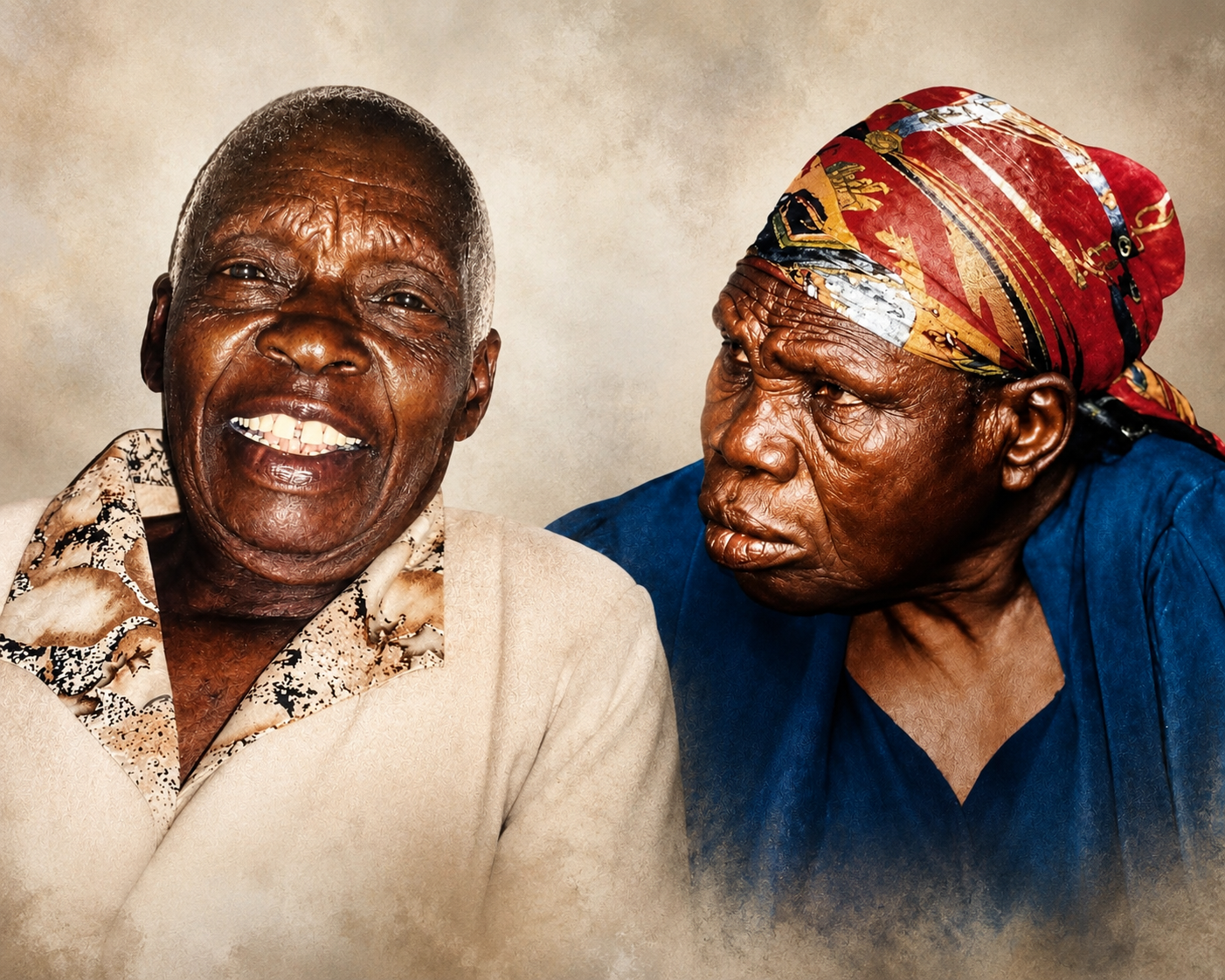
When I think about the women I came from, I see two women, each making the best of the world available to her and both trying, in their own way, to widen the future for the generation that followed.
One worked within a system she could not overturn, quietly planting seeds for a granddaughter she hoped would walk further than she had. The other refused to let the education she had been denied become her children's inheritance.
I realize, too, that they handed me two very different gifts: One taught me that education could change the course of a life, while the other taught me that strength could become an inheritance.
Kwamboka gave me belief. Mokeira gave me a name.
Both my grandmothers permitted me to imagine a life larger than the one history had prepared for me, and everything I have built since - every drawing, every building, every essay - stands, in one way or another, on foundations they laid long before I knew I would need them.
Perhaps that is what inheritance truly is. Not what we receive, but what continues to live through us. And if there is any goodness in the work I leave behind, I hope someone will one day recognize it for what it truly is: The quiet work of the women I came from.